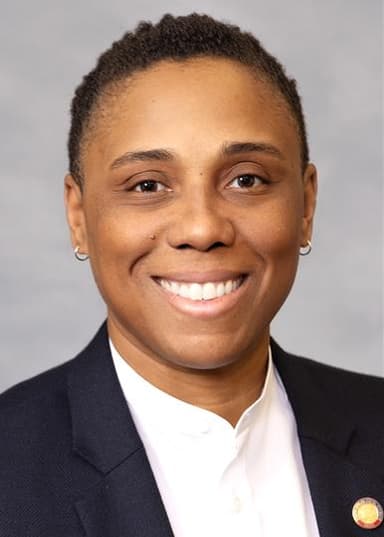
Vernetta Alston
Election Day: November 3, 2026 · Register to vote at ncsbe.gov
Sponsored Bills (35)
Fostering Care in NC Act 2026
This bill makes multiple changes to North Carolina's child welfare and juvenile justice laws, including tightening confidentiality protections for abuse and neglect case records, establishing court procedures for removing individuals from the responsible individuals list, clarifying permanency planning requirements for foster children, streamlining termination of parental rights procedures, and funding a new secure communications platform for court notifications and attorney coordination in child welfare cases.
Red Wolf Special Registration Plate
This bill authorizes North Carolina to create a special Red Wolf registration plate that vehicle owners can purchase for an additional $30 fee. Revenue from the plate sales will be distributed to support red wolf conservation efforts through the North Carolina Wildlife Resources Commission, and NC State University is directed to promote the plate on campus.
NC Constitutional Rights Act/Funds
This bill creates a new North Carolina law allowing people to sue individuals (non-government entities) in state court for violations of federal constitutional rights and seek damages, attorney fees, and other relief. It also appropriates $150,000 to educate the public about these new rights.
Expand Disabled Veteran Prop. Tax Exclusion
This bill expands North Carolina's property tax break for disabled veterans by excluding their entire home value from taxation instead of just the first $45,000. The state will reimburse local governments and school districts for the tax revenue they lose from this expanded exclusion.
The Innovations Waitlist Reduction Act
This bill increases funding for the Innovations waiver program by $240 million to add 6,635 new slots for individuals with disabilities or long-term care needs. It simultaneously modifies the Opportunity Scholarship Program to prioritize lower-income families and reduces that program's funding by $240 million, redirecting those funds to the Innovations waiver expansion.
NC Working Families Economic Relief Act
This bill creates a grant program at North Carolina community colleges to train students as tax preparers through the federal Volunteer Income Tax Assistance (VITA) program, while also providing funding to United Way of North Carolina to expand VITA services. The bill aims to help low-income North Carolinians claim federal tax credits they are eligible for but currently do not claim.
Prepared Foods Sales Tax Modification
This bill modifies North Carolina's sales tax rules for prepared foods by exempting certain prepared foods from state sales tax, while maintaining taxes on items like dietary supplements, vending machine food, and soft drinks. The bill clarifies definitions of what counts as prepared food and creates an exception for artisan bakeries that meet specific revenue and product requirements.
Relieving Housing Bottlenecks
This bill aims to increase housing supply and affordability in North Carolina through multiple strategies: allowing residential development in commercial zones, eliminating parking minimums, creating a program to reimburse local governments for faster housing permit processing, limiting large-scale corporate purchases of single-family homes to 25 or fewer per company, establishing a loan program for workforce housing development costs, and appropriating $160 million to the Housing Finance Agency.
Fostering Care in NC Act
This comprehensive bill makes several changes to North Carolina's child welfare and social services systems. Key provisions expand the Guardianship Assistance Program to include youth as young as 10 years old, establish procedures for judges to issue permanent no-contact orders against defendants convicted of violent offenses, make it a felony when caregivers commit or allow sexual acts against children under 16, and require cities and counties to conduct criminal history background checks for any applicant offered a position working with children.
Cosponsored Bills (115)
Worker Safety Act of 2026
This bill clarifies the process for filing complaints about workplace retaliation under North Carolina's worker protection laws. It specifies what information complaints must contain, allows employers to submit response statements within seven days, requires extra materials submitted with complaints to be destroyed and kept confidential, and establishes how time periods are calculated in these cases.
UNC Omnibus & Capital Contracting Law Changes
This bill authorizes approximately $636.9 million in capital improvement projects across UNC campuses funded through bonds and non-appropriated sources, standardizes residency requirements for the NC School of Science and Mathematics, expands tuition grants for NCSSM and UNCSA graduates, increases the UNC Board of Governors' authority over capital projects up to $4 million, raises various construction project thresholds, and restricts state agencies from using appropriated funds for public-private partnerships without legislative approval.
Mike Clampitt 1st Responder Tax Fairness Act
This bill expands the highway use tax exemption for volunteer fire departments and rescue squads that are not part of local government and have no more than two paid employees. The exemption now applies to fire trucks, pump trucks, tanker trucks, ladder trucks, four-wheel drive forest fire fighting vehicles, and emergency services vehicles.
Rep. Mike Clampitt Bone Marrow Donation Act
This bill designates November as Marrow Donation Awareness Month in North Carolina and allows people ages 18-40 to indicate their intention to become bone marrow donors when applying for or renewing a driver's license. The bill requires the state to share this information with the National Marrow Donor Program and directs state health and motor vehicle agencies to conduct public awareness campaigns about bone marrow donation, with $100,000 allocated for these efforts.
Investing in Teen Mental Health
This bill appropriates $1,290,626 in state funding to the Department of Health and Human Services to expand Teen Mental Health First Aid training programs across North Carolina. The training teaches high school students (grades 9-12) how to identify mental health and substance use challenges in their peers and connect them with trusted adults for support.
Affordability in Healthcare Act
This comprehensive healthcare reform bill aims to lower costs and improve affordability through multiple strategies: establishing a state-supported low-cost health insurance plan option on the marketplace (by 2028), creating a purchasing consortium for public health buyers, expanding chronic disease prevention programs, increasing price and billing transparency, regulating hospital facility fees, strengthening protections for rural healthcare, updating insurance prior authorization rules, and requiring state review of significant hospital transactions to preserve competition.
2026 Governor's Budget
This is North Carolina's 2026 state budget bill, which appropriates funds for state government operations for fiscal years 2026-2027. It allocates approximately $35.4 billion in General Fund spending across education, health, human services, transportation, and other state functions, while also making adjustments to tax rates, employee salaries, and various state programs.
Increase Market Rate/Rate Floor/Child Subsidy
This bill increases child care subsidy payment rates to the 75th percentile of the 2023 market rate study, with automatic increases whenever new studies are completed. It also establishes a statewide rate floor for child care providers in counties with rates below the state level. The bill appropriates $60 million from the General Fund, $20 million from the Child Care Block Grant, and $160 million from the General Fund to fund these increases, beginning July 1, 2026.
2026 Governor's Budget
This is North Carolina's 2026 state budget bill, which appropriates approximately $35.4 billion in General Fund spending for the fiscal year 2026-2027 and sets salary schedules for state employees, teachers, and officials. The bill includes funding for education, health and human services, transportation, and other state operations, along with various policy changes affecting education, taxation, and state administration.
Voting Record (735)
- Yea2025-04-16
Tobacco and Hemp on Nonpublic School Grounds
- Nay2025-04-16
Promoting Wholesome Content for Students
- Yea2025-04-16
Medicaid Prepaid Health Plan Practices
- Yea2025-04-16
Study on Year-Round School
- Yea2025-04-16
Property Tax Relief Study
- Yea2025-04-16
Promoting Wholesome Content for Students
- Yea2025-04-16
NC Farmland and Military Protection Act
- Yea2025-04-16
Regulate Hemp-Derived Consumables
- Yea2025-04-16
Limit Rules With Substantial Financial Costs
- Nay2025-04-16
Limit Rules With Substantial Financial Costs
- Yea2025-04-15
Modify HC POA/Adv Direct
- Yea2025-04-15
Town of Burgaw Property Transfer
- Nay2025-04-15
Drug-Free Zones/Unauthorized Public Camping
- Nay2025-04-15
Child Care Regulatory Reforms
- Yea2025-04-15
Child Care Regulatory Reforms
- Yea2025-04-15
Military and Veterans Educational Promise Act
- Yea2025-04-15
Various Ed Law/Tax Acct/NIL Changes
- Yea2025-04-15
UNC Tuition Discounts for Certain Students
- Not Voting2025-04-15
Various Local Provisions VI
- Yea2025-04-15
The Sergeant Mickey Hutchens Act