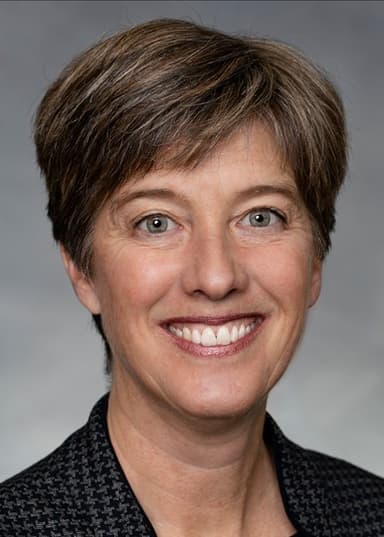
Julie Mayfield
Election Day: November 3, 2026 · Register to vote at ncsbe.gov
Sponsored Bills (34)
Various Local Provisions VIII
This bill makes several local government boundary changes across North Carolina. It removes satellite annexation caps for Bailey, Weaverville, and Cherryville; removes specific parcels of land from seven municipalities' corporate limits (Morehead City, Washington, Kernersville, Red Oak, Vass, Waynesville, and Walnut Creek); and restricts the Village of Walnut Creek from exercising municipal powers beyond its contiguous boundaries.
Portable-Scale Solar Energy Devices
This bill allows North Carolina residents to use small portable solar energy devices (up to 1.92 kilowatts) without needing utility company approval or paying installation fees, as long as the devices are primarily for personal use and have safety features. The bill also provides $100,000 in funding to expand the Board of Examiners of Electrical Contractors' public awareness program about electrical code requirements.
Safe Parks Act
The Safe Parks Act creates a new funding account to clean up environmental contamination at public parks caused by old landfills and hazardous sites. It increases the solid waste disposal tax from $2 to $4 per ton and redirects a portion of corporate income tax revenue to pay for park remediation, requiring local governments to match every $4 in state funds with $1 of local funding.
Nonprofit Hospitals Tax Exemption
This bill modifies how nonprofit hospitals receive property tax and sales tax exemptions in North Carolina. Instead of exempting all hospital property from taxes, the bill limits exemptions to an amount equal to the actual cost of charity care the hospital provides to low-income uninsured and underinsured patients (those earning up to 300% of the federal poverty level).
The Frontline Mental Health Support Act
This bill establishes the Frontline Mental Health Support Program to provide free, confidential mental health counseling services to teachers and first responders (including police officers, firefighters, paramedics, 911 dispatchers, and correctional officers) in North Carolina. The bill appropriates $10 million to run the program and $3 million in grants to expand the behavioral health workforce to support it.
Restore Down-Zoning Auth./Woodfin
This bill restores the Town of Woodfin's authority to initiate down-zoning (reducing allowed development density or permitted uses on properties) without requiring written consent from all affected property owners. It modifies state law to create an exception for Woodfin and applies retroactively to December 11, 2024.
Temp. Local Sales Tax Changes/Buncombe Co
This bill temporarily allows Buncombe County to use sales tax revenue for both school building projects and operating expenses (like teacher salaries and supplies) for two years, instead of only building projects. It also makes organizational changes to the School Capital Fund Commission that oversees these funds.
Preserving Competition in Healthcare Act
This bill creates a new state review process for hospital mergers and acquisitions valued at $5 million or more. The State Auditor, Attorney General, and State Treasurer must review proposed transactions, hold public hearings, and can object if they determine the deal would harm healthcare competition, access, affordability, or quality in North Carolina.
Second Chance Success Act
This bill prevents probation terms from being extended solely because someone fails to pay their $40 monthly probation supervision fee. It also removes language requiring the payment of certain criminal justice fees associated with community service and other probation conditions, though the supervision fee itself remains in place.
Cosponsored Bills (91)
Board of Cosmetic Art Examiners Amendments
This bill makes several changes to North Carolina's cosmetic art licensing requirements. It reduces training hours for cosmetologists (from 1,500 to 1,200 hours), eliminates the apprentice license category and converts existing apprentices to cosmetologists, creates a new hair designer license (900 hours) and hair braider certification (24 hours), reduces training hours for natural hair care specialists and teachers, allows mobile cosmetic art shops to operate, and reduces continuing education requirements for license renewal.
Medicaid Rebase
This bill appropriates $319 million in annual recurring funds from the General Fund to the Department of Health and Human Services for Medicaid, beginning in the 2025-2027 fiscal biennium. The funds are designated to cover projected increases in Medicaid enrollment, changes in the mix of enrollees, service costs, capitation costs, and shifts in federal matching funds.
No Budget, No Pay Act
This bill requires the salaries of North Carolina General Assembly members to be held in escrow (set aside) if the legislature does not pass a budget for fiscal year 2026-2027 by June 30, 2026. The withheld pay would be released once a budget is ratified or the legislative session ends.
Ensure Same-Sex Domestic Violence Prot. Order
This bill expands North Carolina's domestic violence protective order law to include same-sex couples by removing language that limits protections to opposite-sex relationships. It also appropriates $500,000 for a public awareness campaign about domestic violence in same-sex relationships.
Increase Oral Health Care Access in NC
This bill appropriates $80 million in recurring state funds to increase Medicaid reimbursement rates for dental services, which have not been meaningfully increased since 2008. The goal is to encourage more dentists to accept Medicaid patients and improve access to oral health care for low-income North Carolinians.
Modernize Medicaid Primary Care Rates
This bill appropriates $48 million in state funds to increase Medicaid reimbursement rates for primary care services in North Carolina to match Medicare rates, effective July 1, 2026. The increased payments would apply to primary care services as defined by the state's Primary Care Payment Reform Task Force.
Hands Free NC
Hands Free NC replaces existing distracted driving laws with a comprehensive ban on using wireless communication devices while operating a motor vehicle. Drivers cannot hold devices in their hands, watch videos, or text, with exceptions for emergency calls and certain professionals performing official duties. Violations result in fines ($100-$200) and potential insurance points, with stricter penalties for school bus operators and repeat offenders.
Align Medicaid Eligibility with Federal Law
This bill directs North Carolina's Department of Health and Human Services to terminate Medicaid contracts with Planned Parenthood Federation of America and its associated entities, and to arrange for other Medicaid providers to deliver services that Planned Parenthood currently provides.
State Hiring Accessibility and Modernization
This bill modernizes North Carolina's state hiring system by reducing educational barriers to state jobs, streamlining job applications, simplifying job postings, and giving state agencies more flexibility in recruiting, hiring, and compensating employees. It also allows agencies to hire temporary employees permanently and rehire qualified candidates from previous postings without reposting positions.
Voting Record (624)
- Yea2025-02-12
Political Terrorism Prevention Act
- Yea2025-02-12
Govt Mandates Increase Healthcare Costs
- Yea2025-01-08
Senate Permanent Rules
- Yea2025-01-08
Adjourn 2025 Organizational Session